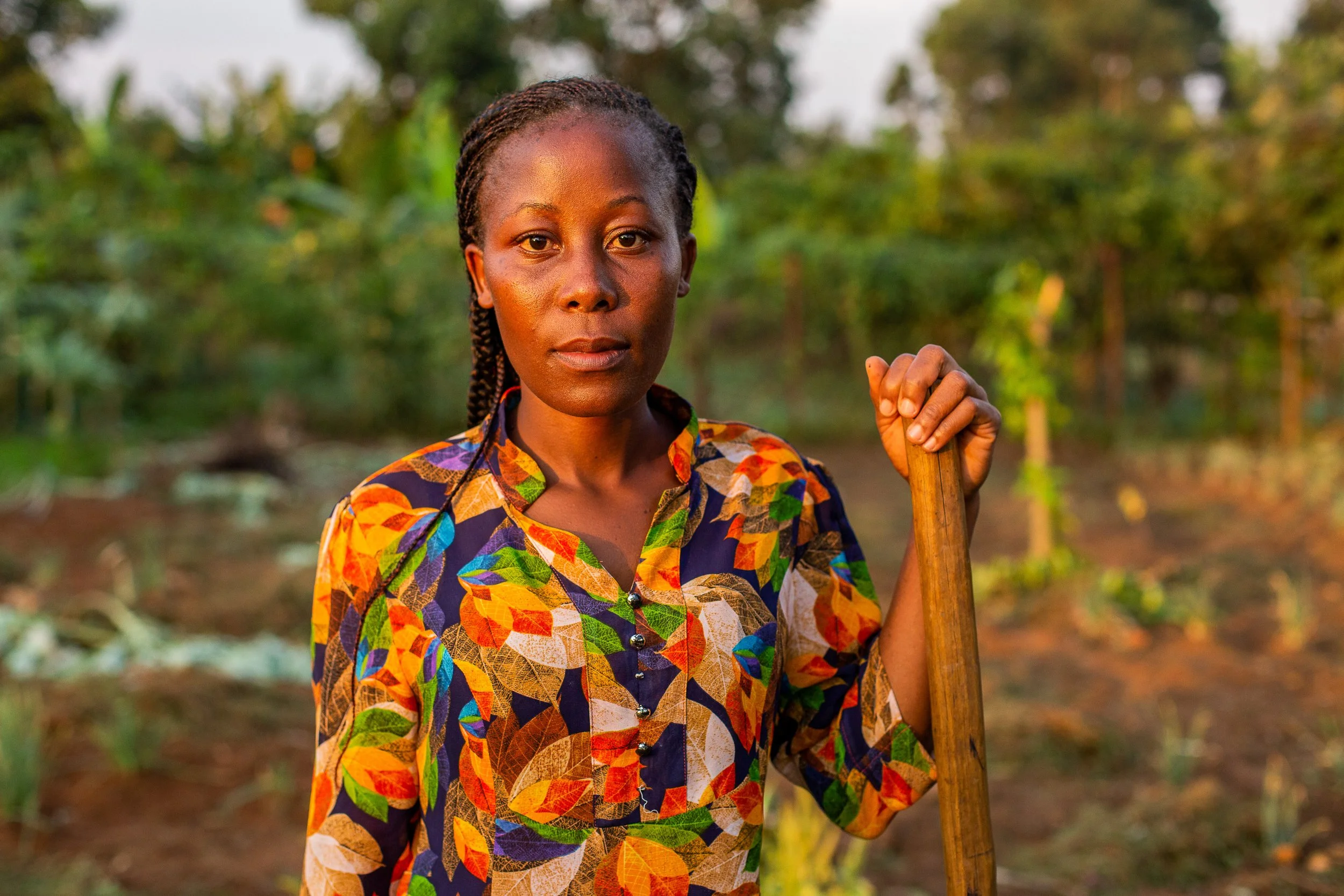
Furaha.
This business can change my life and the life of my family.
In Congo, life was easier. What destroyed all of it was the war. That’s what made us flee and come here.
My name is Furaha. I live in Rwamwanja Refugee Settlement with my husband, my father-in-law, my children, and their uncle.
Life here is not always easy, but I work hard to care for my family.
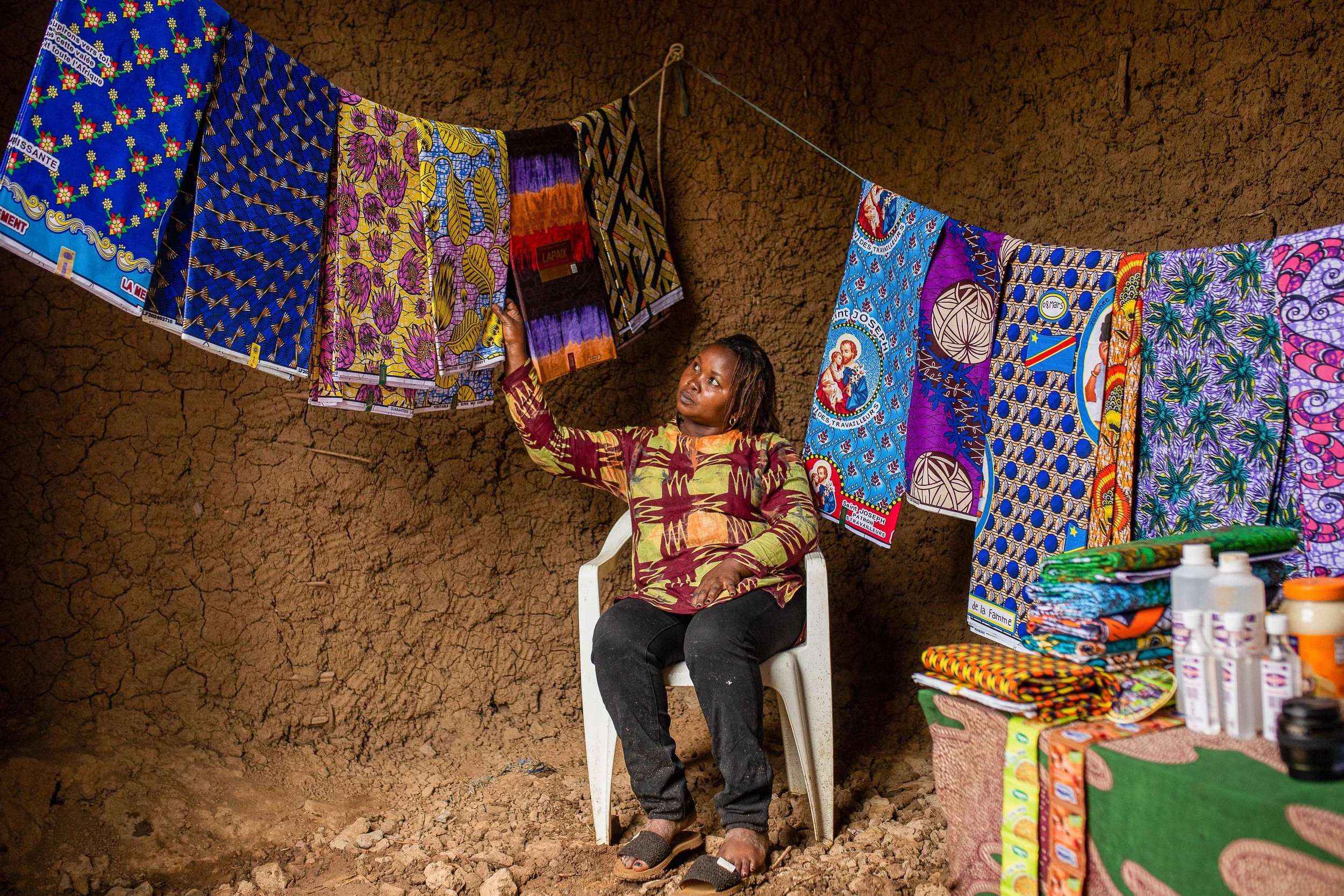
I operate a small business selling African wax prints and also raise chickens, ducks, and other livestock to support those who rely on me.
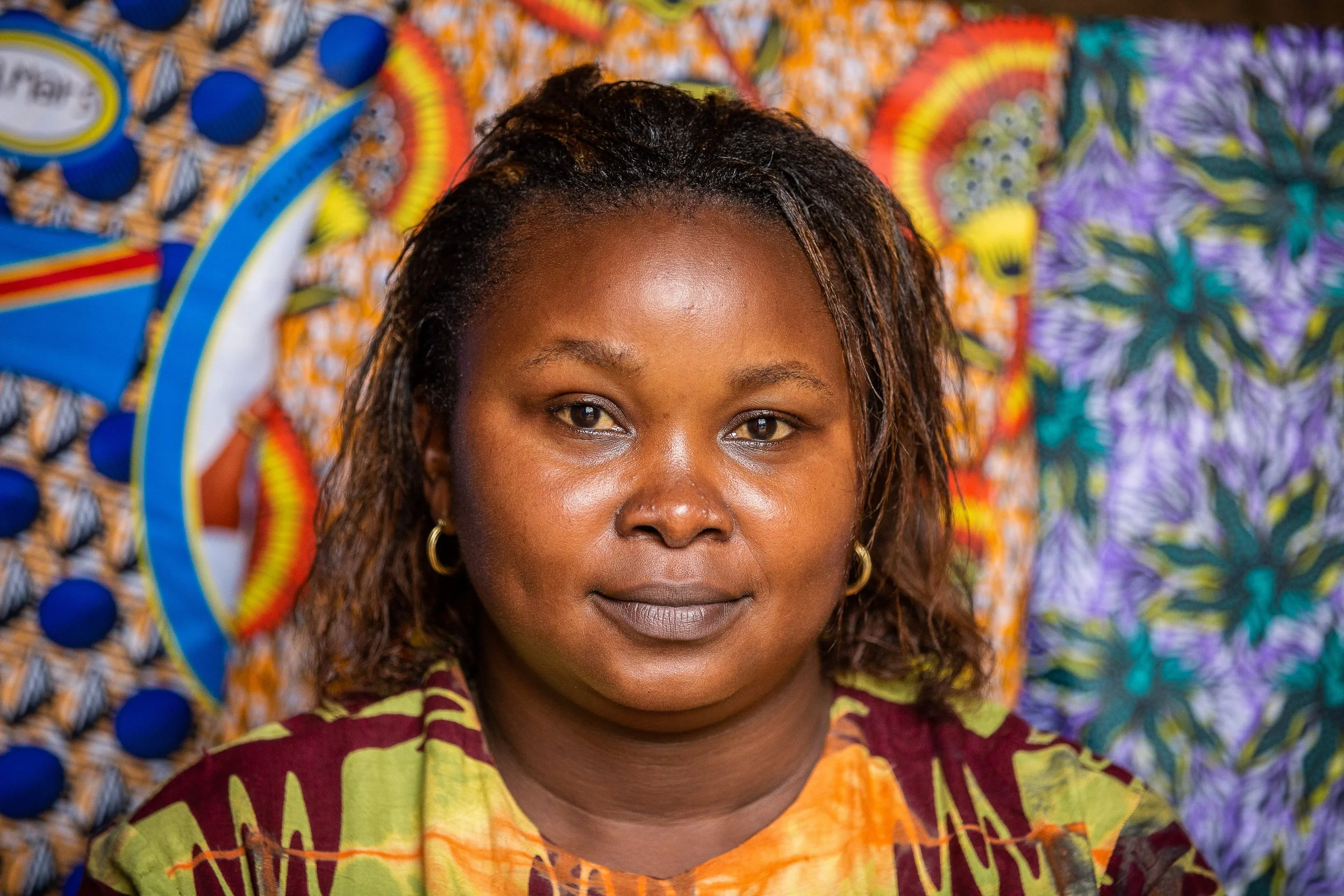
Before the war, I also worked in business, often with the support of banks that provided us with loans. Life there was easier.
I remember I was pregnant with my second child. I was at home and bombs were falling. Our neighbours house was a multi-storey and we heard a bomb fall on it.
We went under the beds. I lay on the floor with my baby bump next to my father-in-law. My husband ran inside and said a neighbours child had just lost his leg and arm in the bomb.
We knew we needed to flee.
When gunshots decreased, we started to flee. I called my family and they said they couldn’t find my father. It was very hard and sad.
We walked for days at first, sleeping wherever possible. Then took a bus to Nyakabande and continued until we reached Rwamwanja.
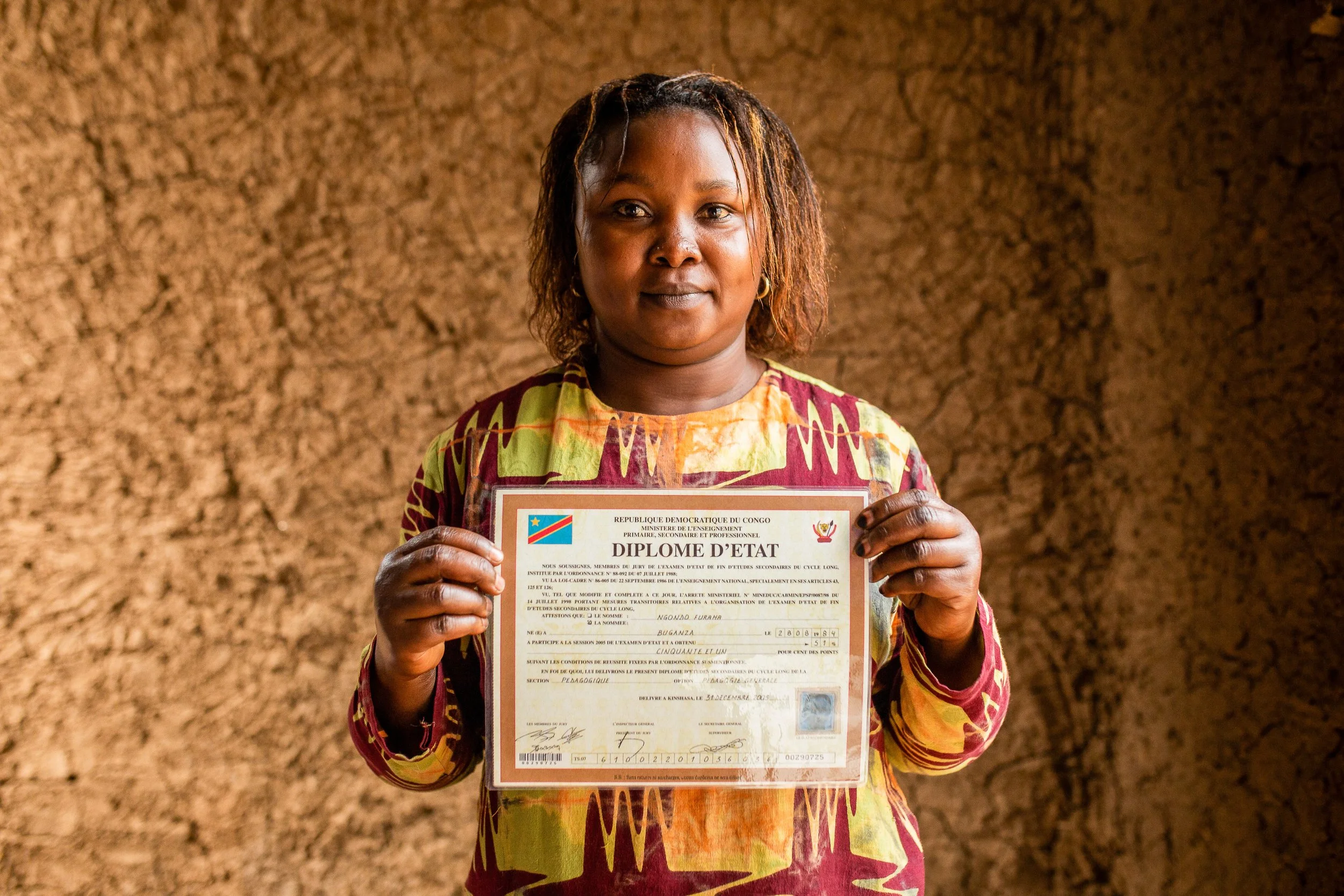
We fled with our clothes and a little money, everything else was left in Goma. But I did bring my diploma. I thought it was very important because it could help me to get a job.
Starting over was difficult.
I began by selling chickens. I got a bit of money that I used to buy food like beans. Gradually, I rebuilt by expanding into African wax prints.
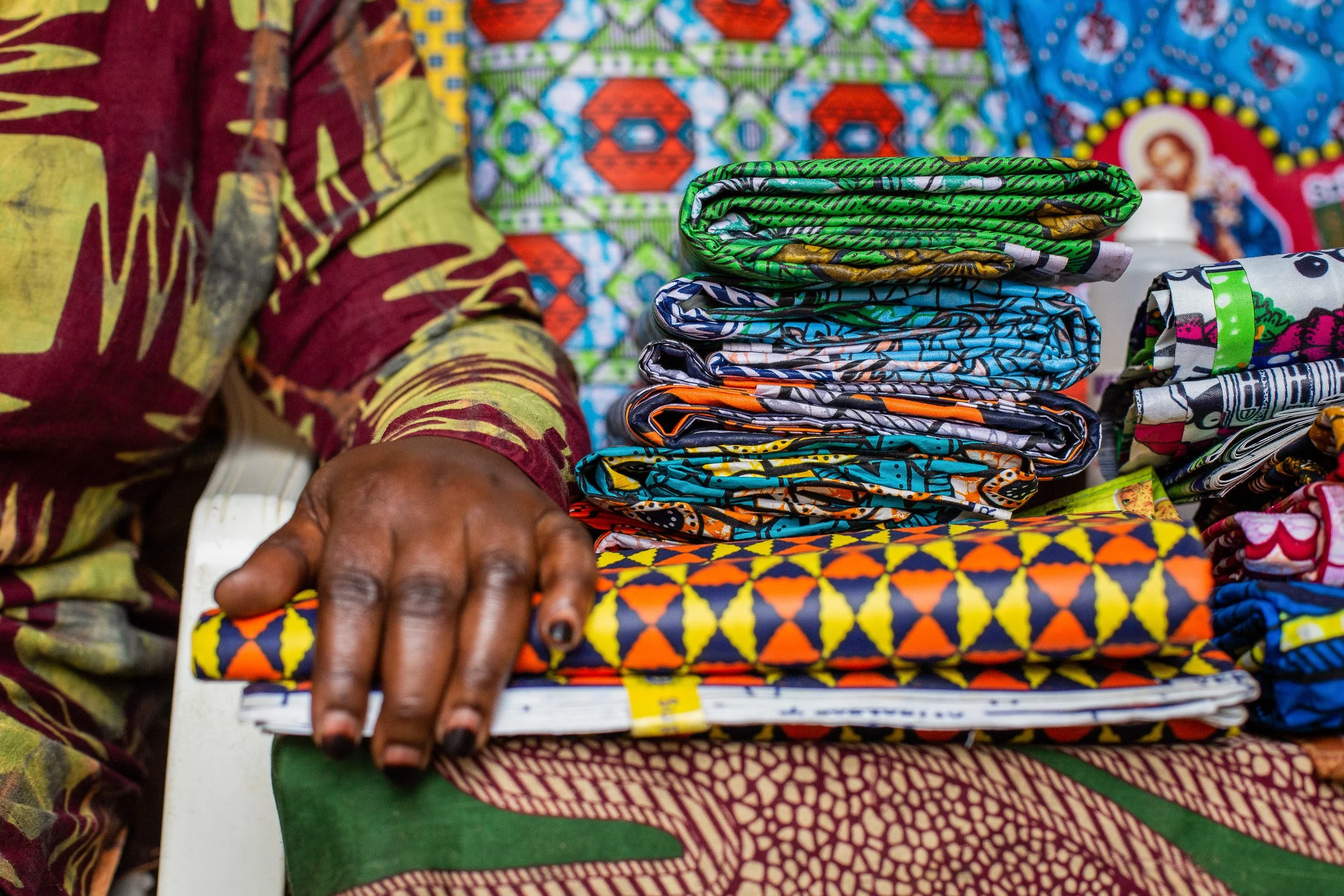
Life in the settlement can be difficult. Sometimes I have products to sell but no customers, or there are times when I do not have enough capital.
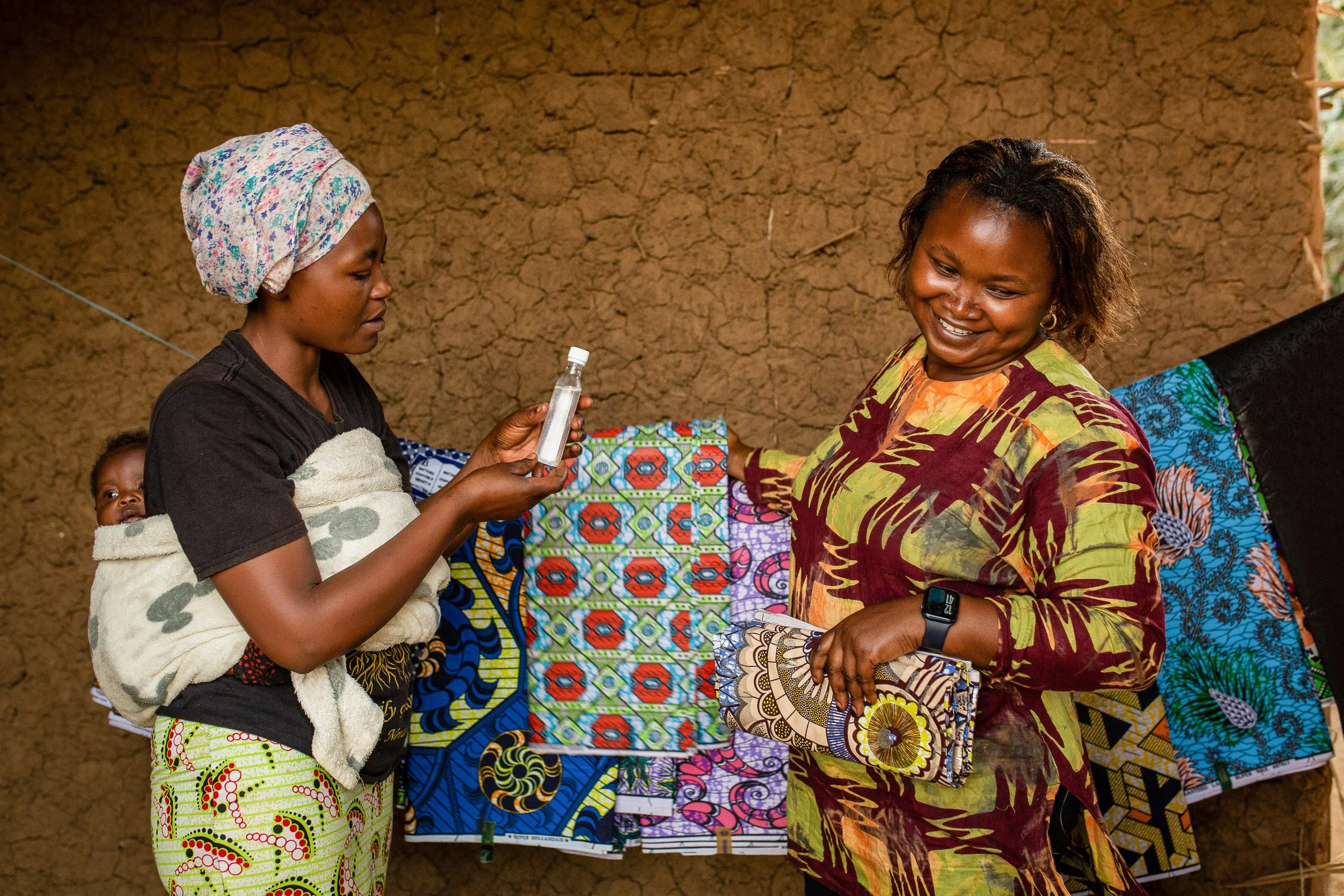
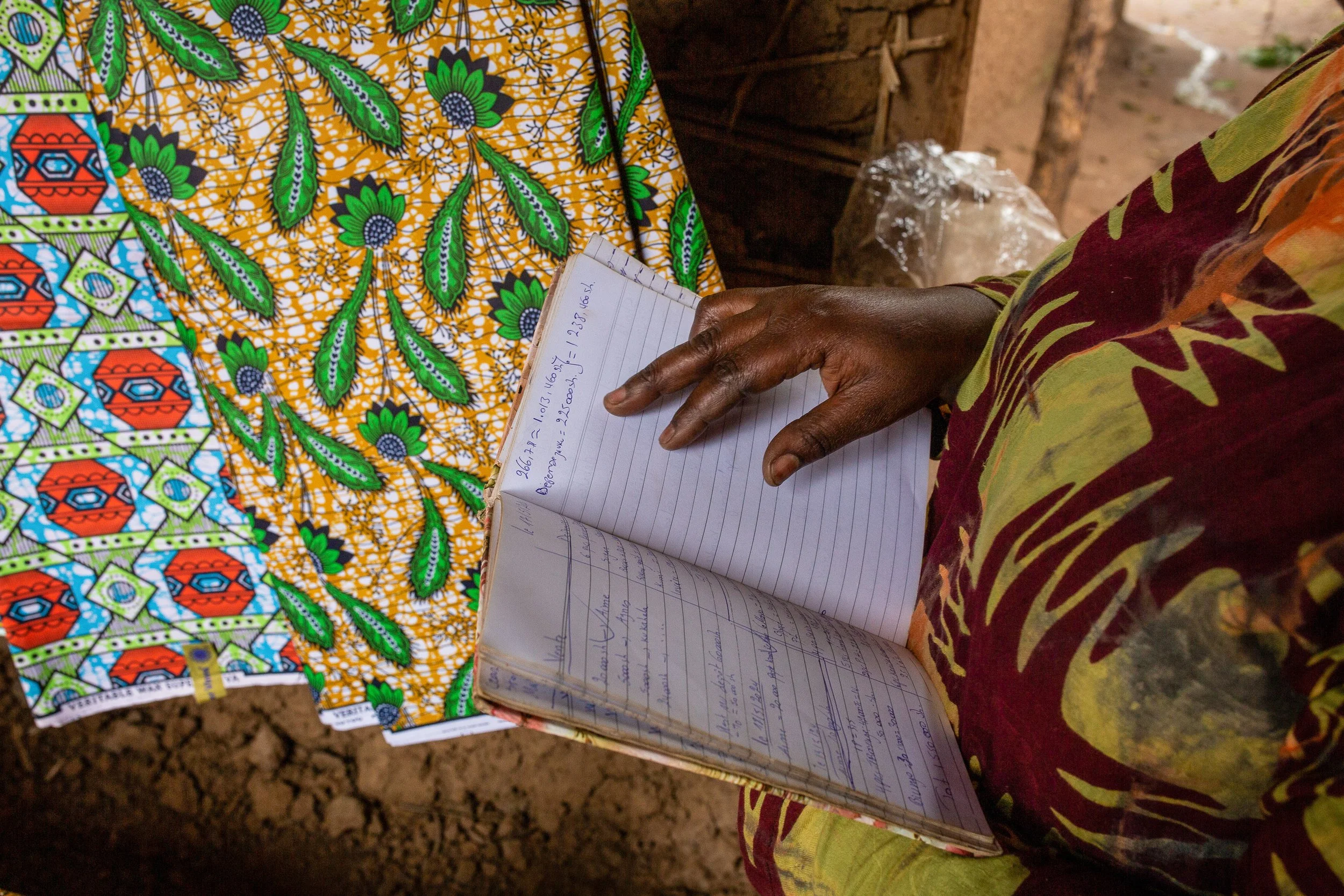
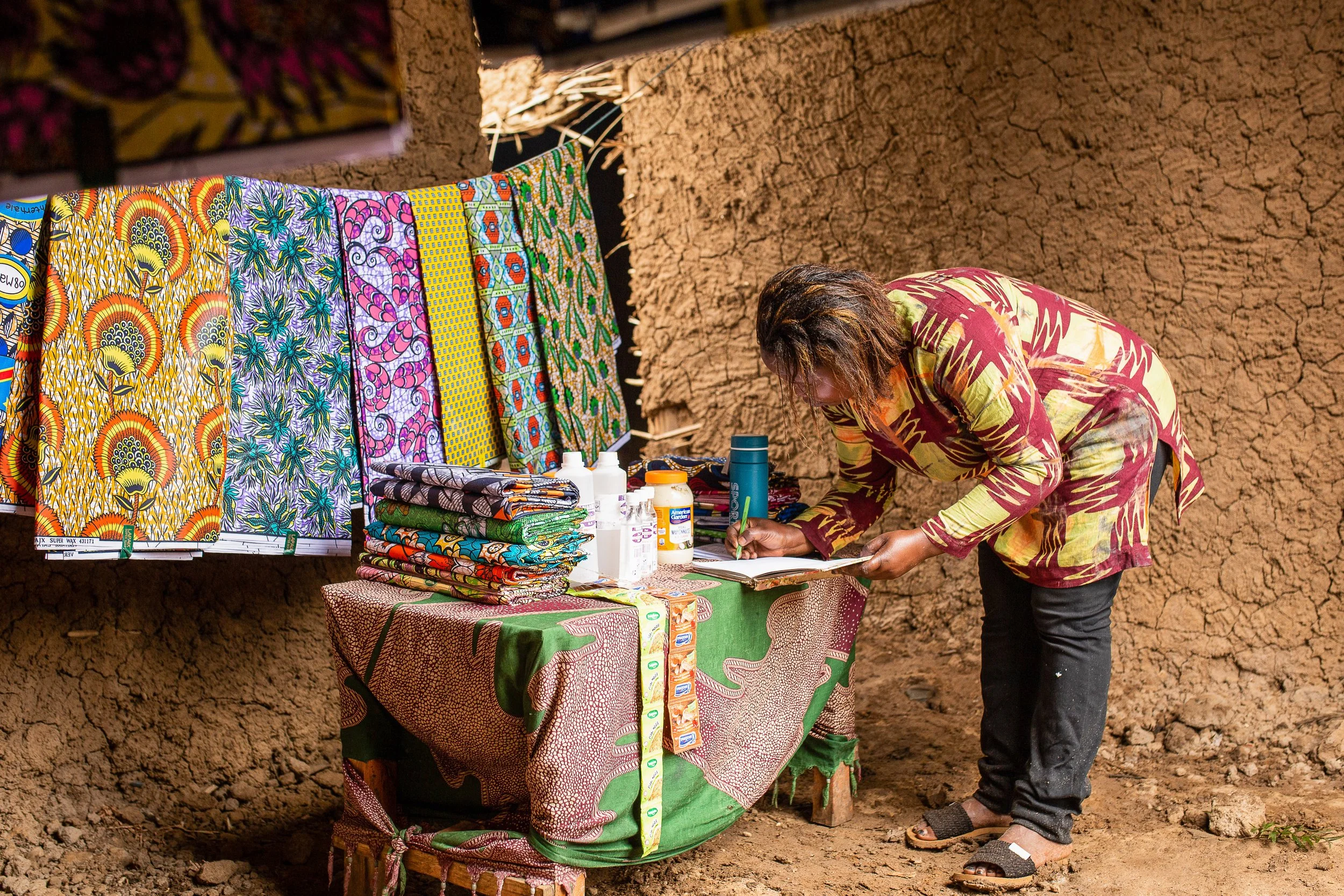
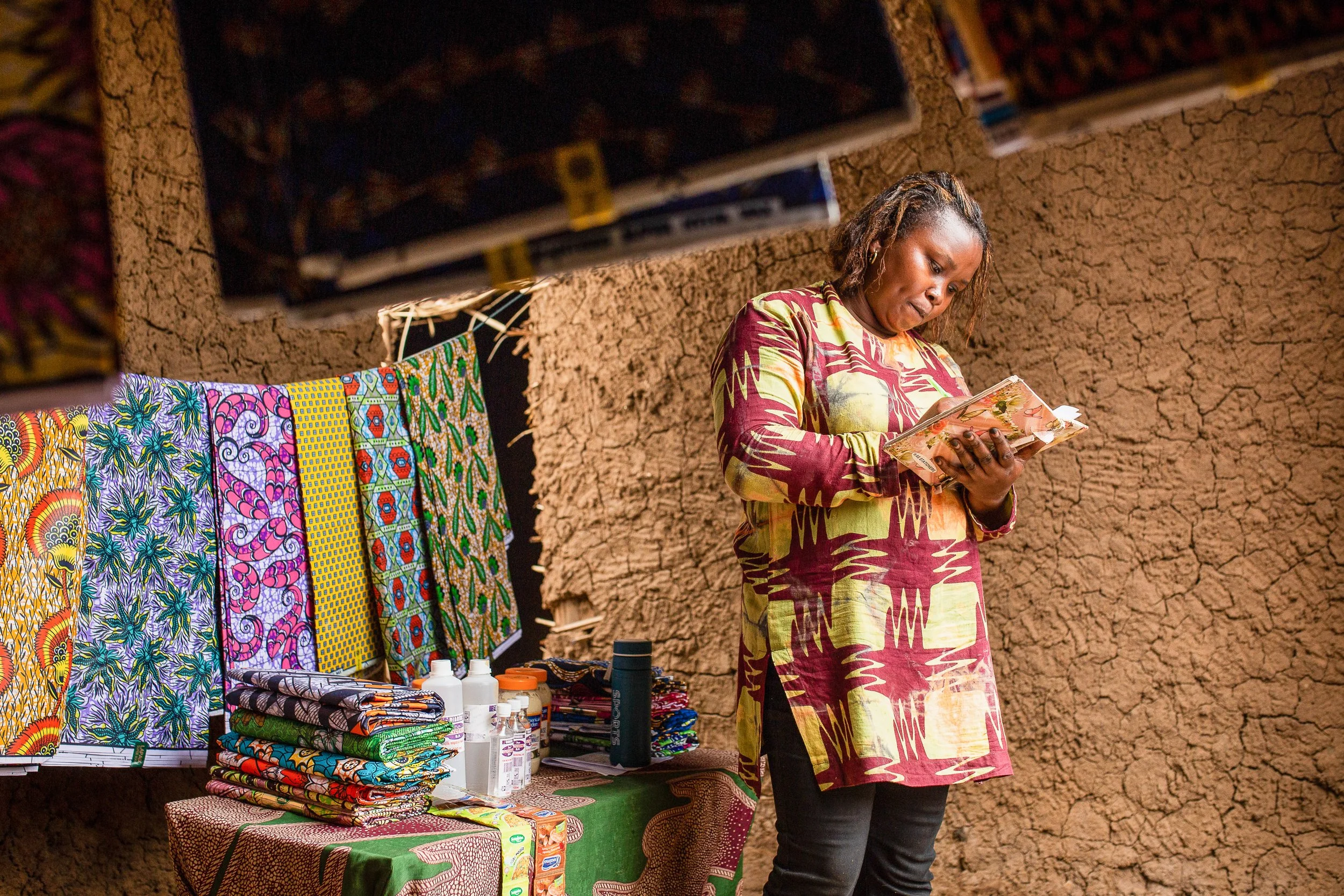
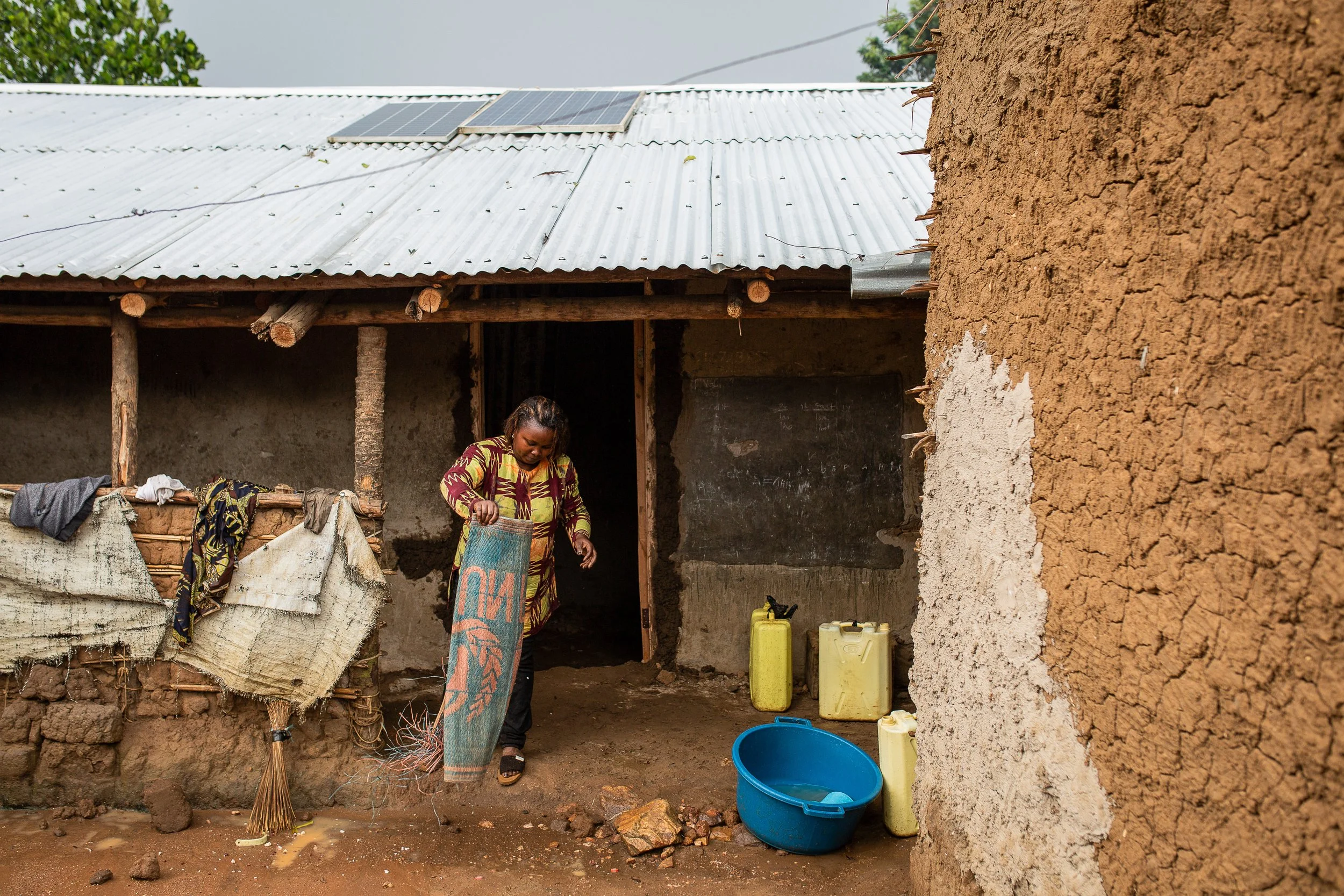
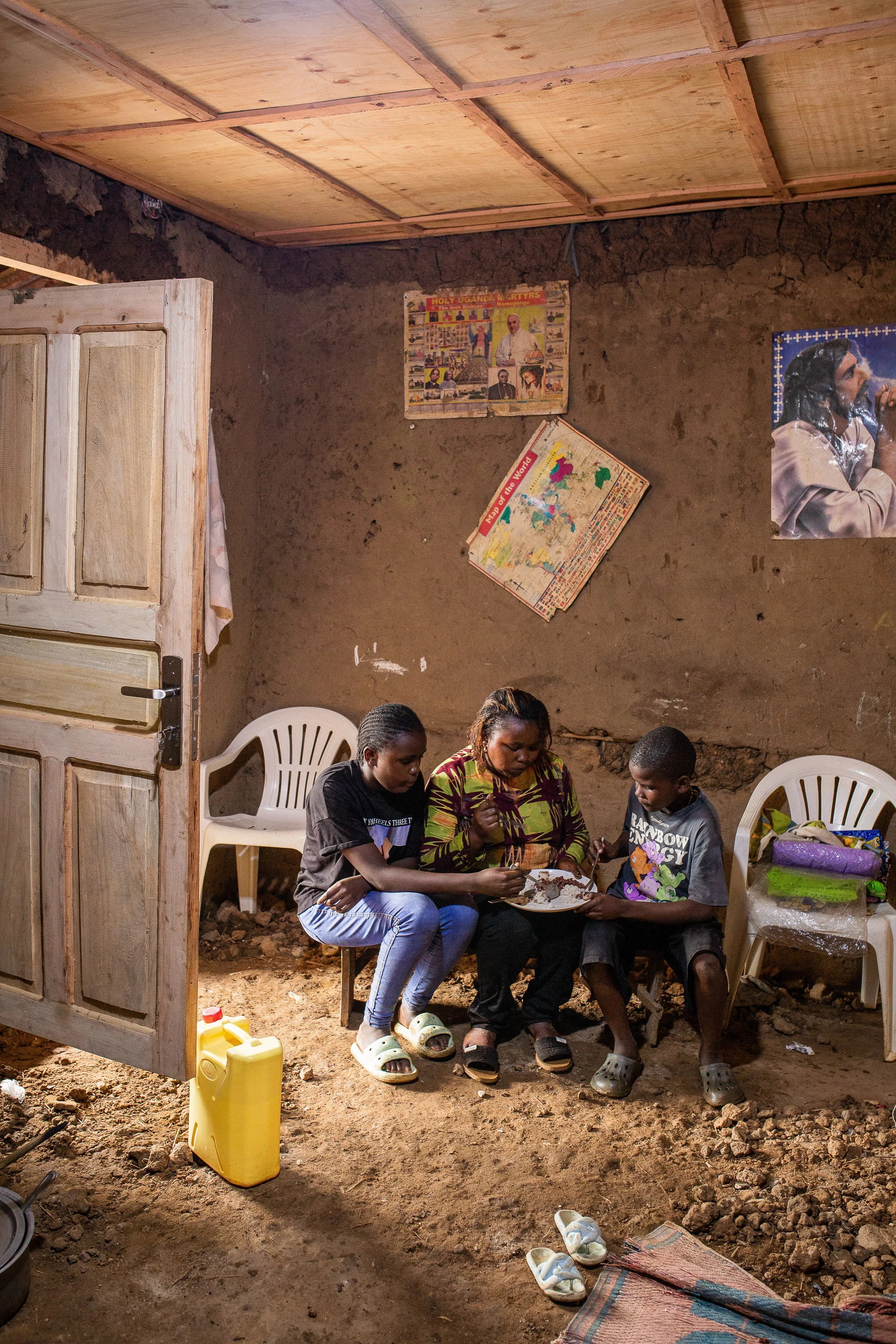
Opportunity International taught us financial literacy and business. We learnt to save money, how to budget, how to get a loan to start a small business, how to get capital and how to use your profits.
Before the training, I would earn money and spend most of it without a clear plan. I also didn’t trust having a bank account. But today, I think it’s a good thing. In the past, I was also afraid to take out loans. But today, I take out loans, use them and invest them.
Today I feel confident.
A lot has changed since the training.
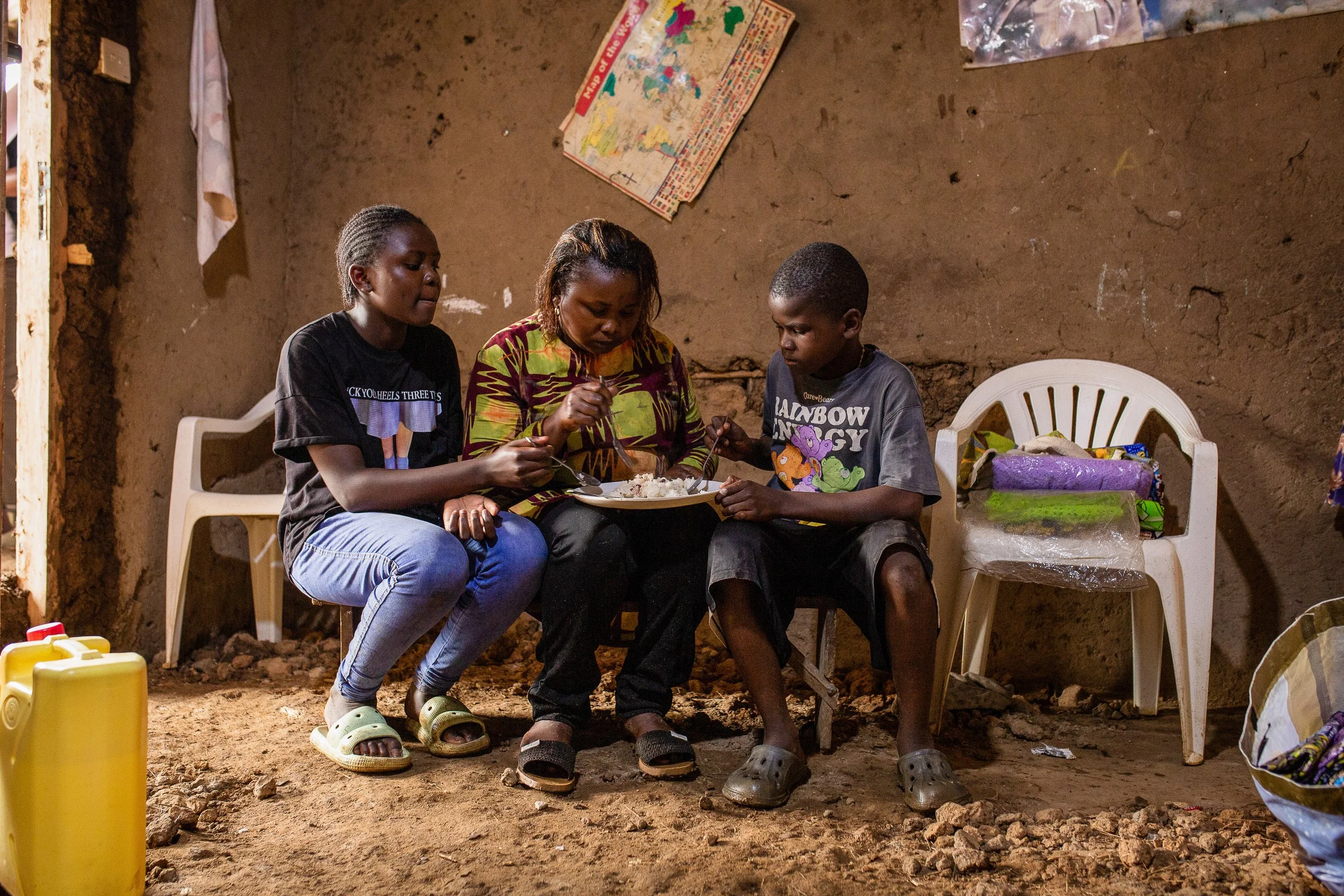
My financial situation is stable. My children are in a good school and eating well. Most of the time we weren’t eating until 4pm. Today they’re able to get milk in the morning, beans and sweet potatoes at noon, and some fish at night.
My business keeps growing too, though challenges remain. Sometimes I have customers who ask for chickens at times I don’t have any left. Or there are customers preparing a wedding who need 10 sets of the same African wax print, but right now, I don’t have the capital to bring those products from Congo.
As a woman entrepreneur, I have also encountered challenges. There are times when you get sick, or you have to take a long trip to buy wholesale products, and that creates tension with my husband. Sometimes you can also be discriminated against. They won’t listen to us properly.
It’s important to give women the opportunity to start a business because a woman already has the love of her family: she wants to take care of them. While sometimes a man can get money and spend it on women or alcohol, but for a woman she will use her business to care for her family.
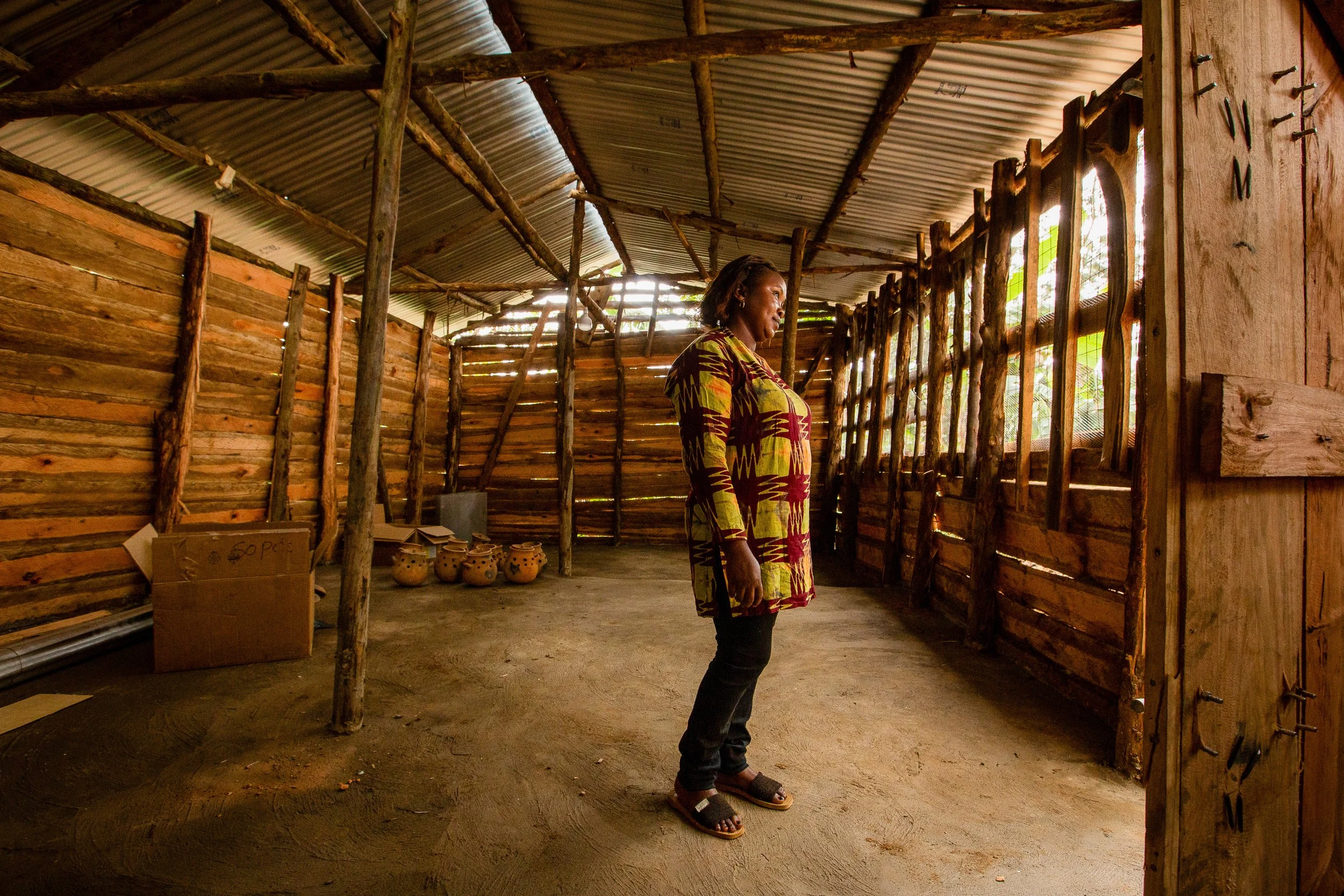
My dream is to open a big shop where customers can find everything they need. I want to expand beyond wax prints to sell shoes, wigs, jewellery, and other fashion goods. I also plan to continue growing my livestock business.
At home, I want to renovate our house. I want to be able to buy chairs for the house, to have a food stock, for my children to be dressed well and to be happy. I know in the future I will be able to afford these.
In Uganda there is security, so I would love for them to live well.
This business can change my life and the life of my family through my income. I am now able to answer every household need; we are getting all we need.
Discover more stories
-
![Savino stands smiling outside of his business weaning a bright orange top that says 'nutrishield']()
Savino
-
![Mediatrice looks off to the right of a camera, she is wearing a pink apron and against a green painted wall.]()
Mediatrice
-
![Joshua stands in his fish farm, knee deep in water.]()
Joshua
-
![Luhavu looks to the camera wearing a bright red coat and protective glasses on his head.]()
Luhavu
-
![Ruth stands in her kale field at sunset, her hand resting on top of a farm tool.]()
Ruth
-
![Alfred looks off to his left and stands against a wall of black and white photos printed on white, yellow and pink paper.]()
Alfred
-
![Salama sits indoors and smiles to camera.]()
Salama