Salama.
You can’t achieve anything in life alone.
But if you work together with others, you can achieve something.
Before the war, life was good. We were doing well with the children. I had a husband who provided for our family.
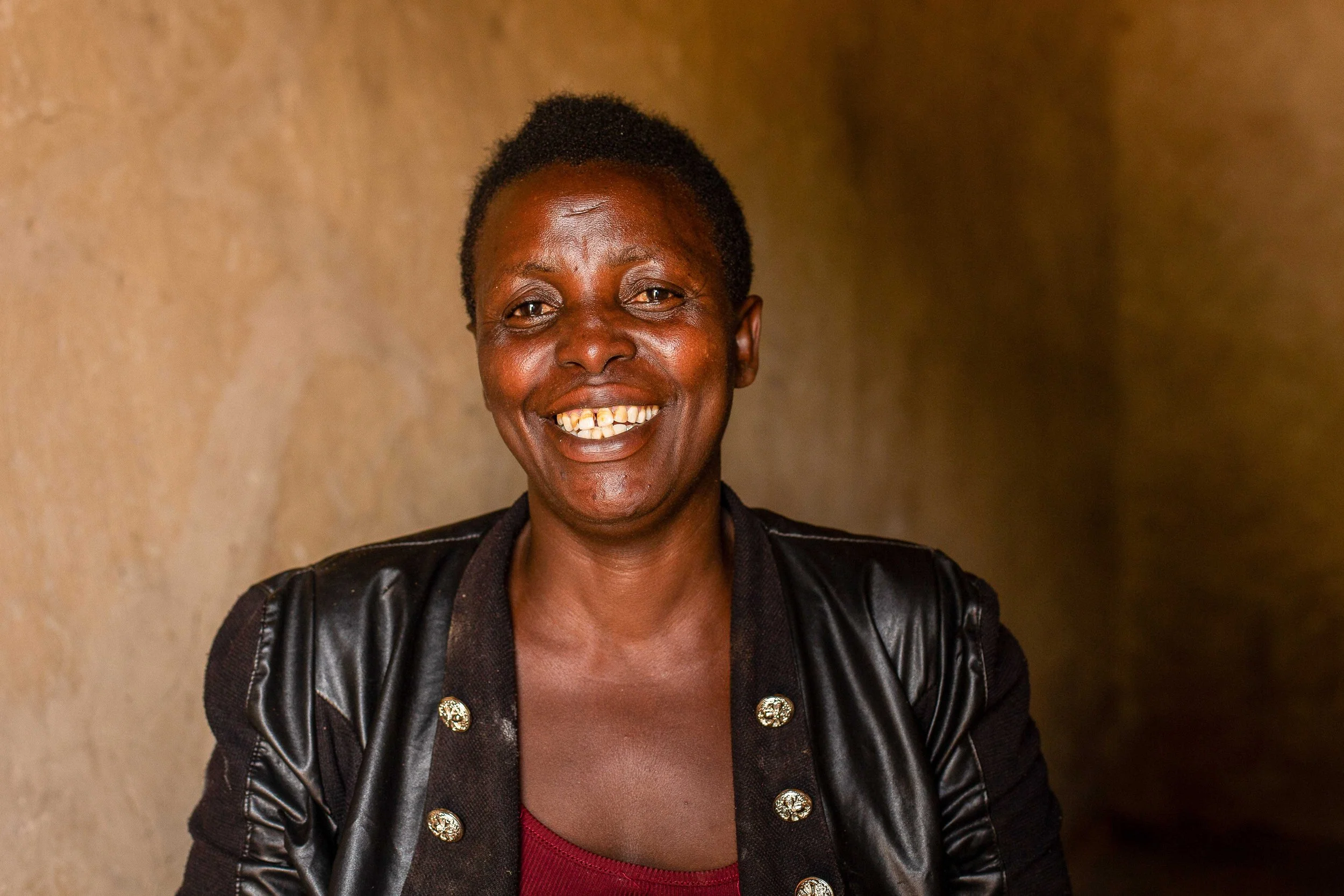
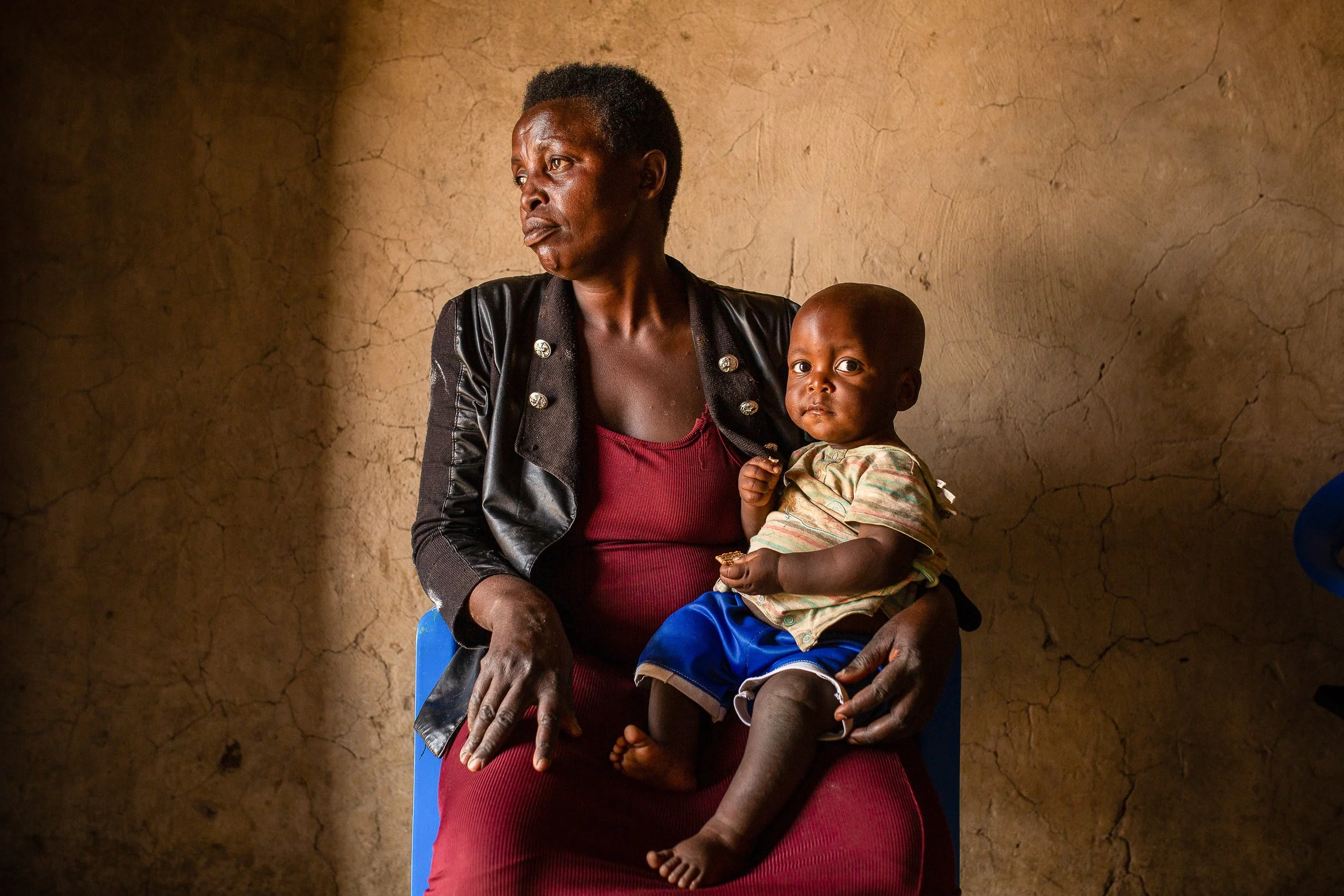
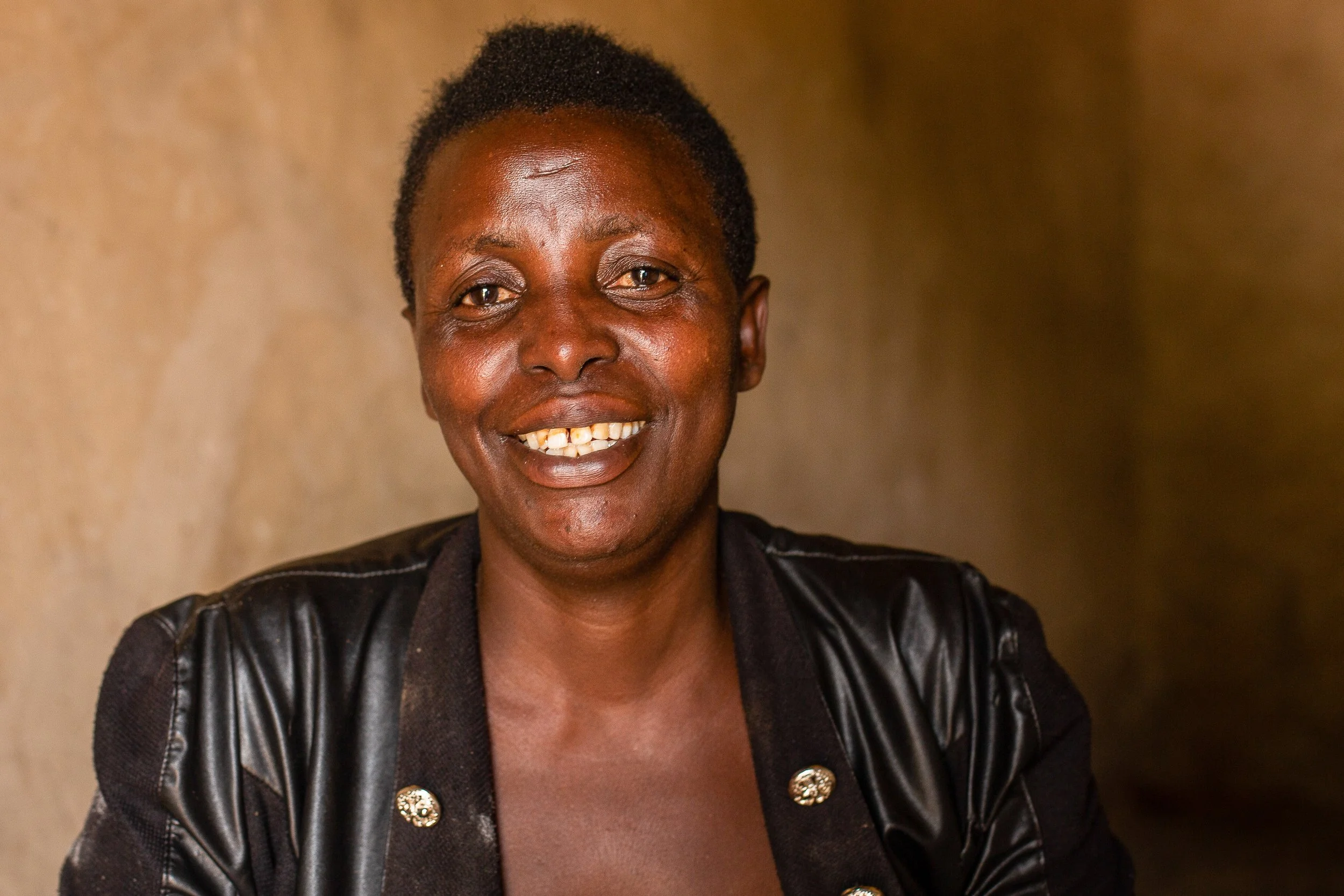
My name is Salama, I’m a single mother of five and I’m 36 years old.
I came from the Democratic Republic of Congo, escaping the war. We were doing well. I had a husband who provided for our family.
Then the war came and displaced us and we scattered. My husband went one way, and the children ran a different way.
To this day, I don’t know if he is dead or alive.
I arrived in Uganda in 2017 and now live in Rwamwanja Refugee Settlement.
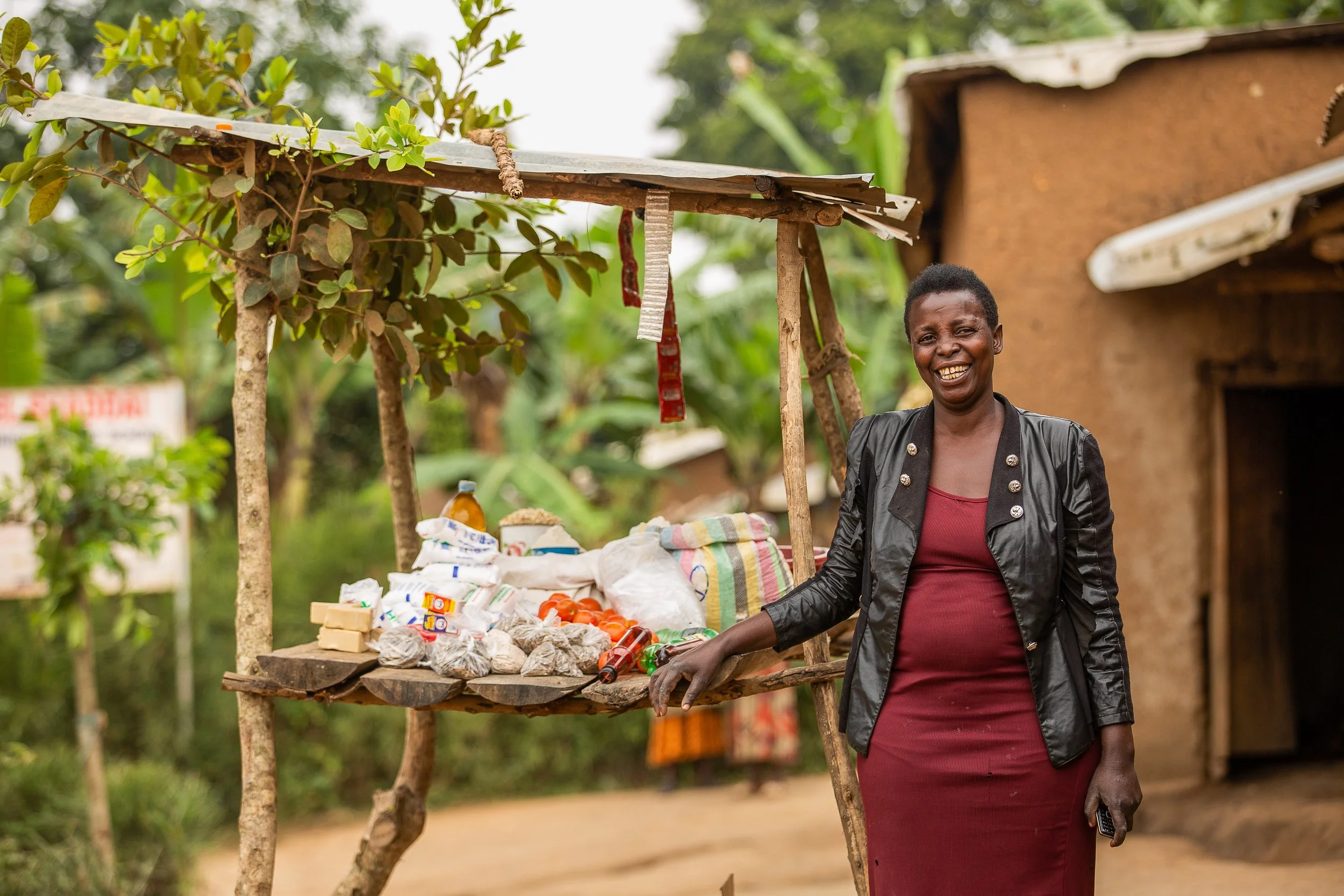
Life in Uganda is challenging; being a single mother is hard since I am disabled. I also gave birth to two more children, so now I have five children.
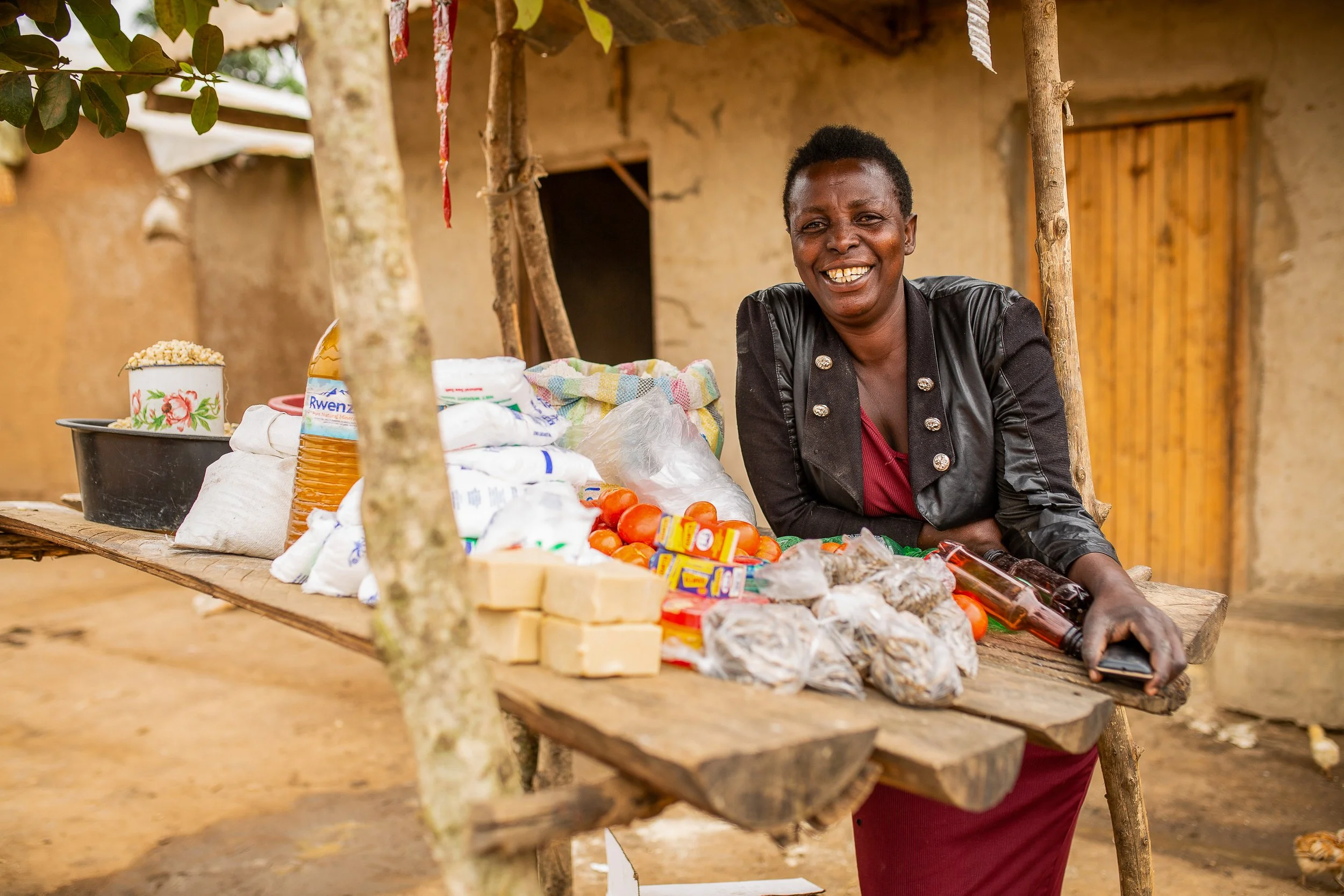
I have an outside stall where I sell maize flour, cassava flour, tomatoes, palm oil, soap, salt, and sugarcane, and so on. This helps me pay for my children’s school fees and medication.
Before, my money management was poor. I used to squander it. I would buy anything I came across without a plan, like clothes or food. I also I didn’t know how to save. I wanted to go to the bank, but I was afraid of debts and that they might not lend to me.
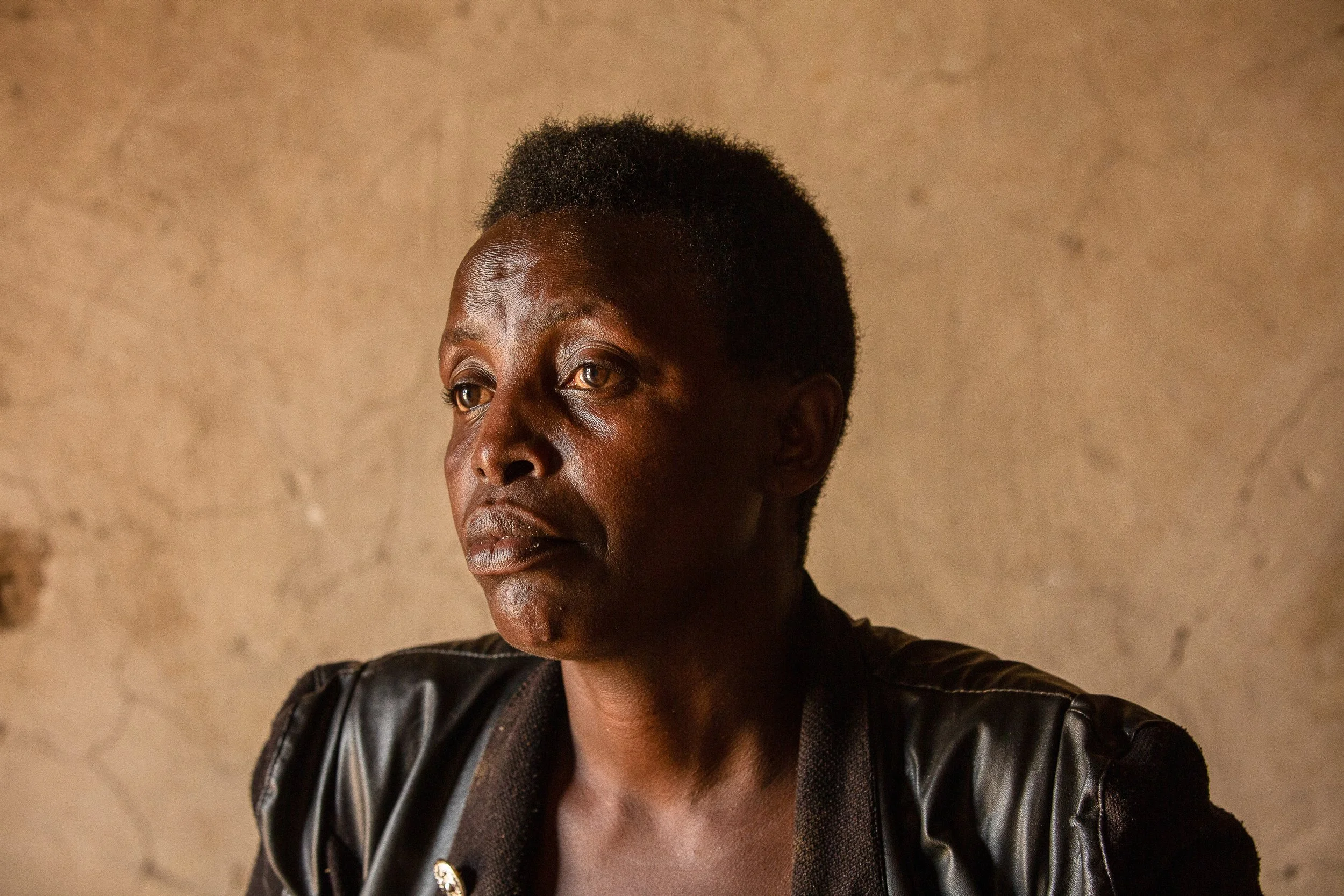
Since leaving DRC and arriving in Rwamwanja, I wanted to keep working. My business helped me in every way.
Before the training, I was blind in the eyes and the brain, I was without a mind.
I joined a savings group and Opportunity International came and trained us. They taught me how to run a business, how to save, how to treat customers, buy and sell merchandise, sell for cash, and be careful with debts.
We realised that working together is good. You can’t achieve anything in life alone. But if you work together with others, you can achieve something.
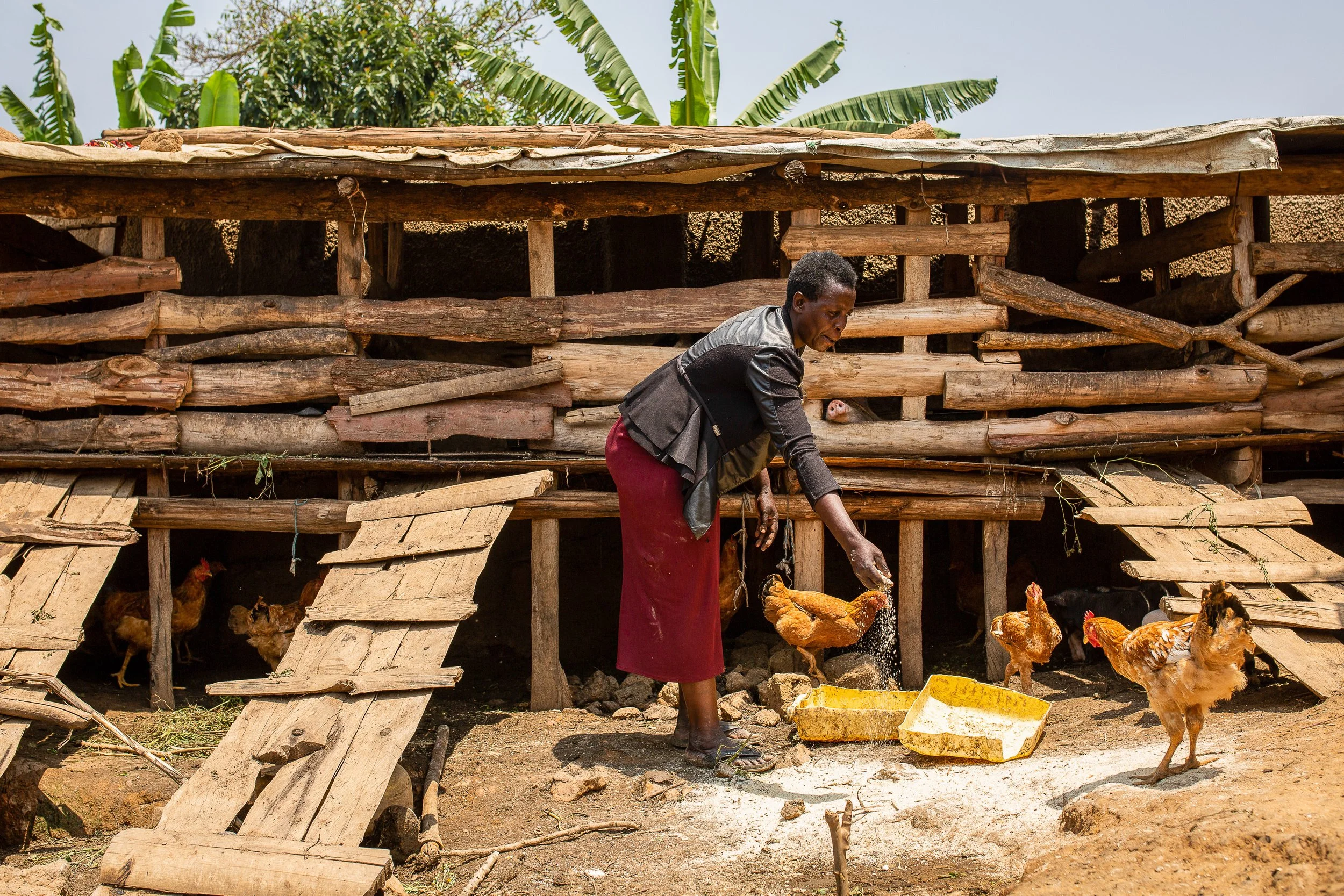
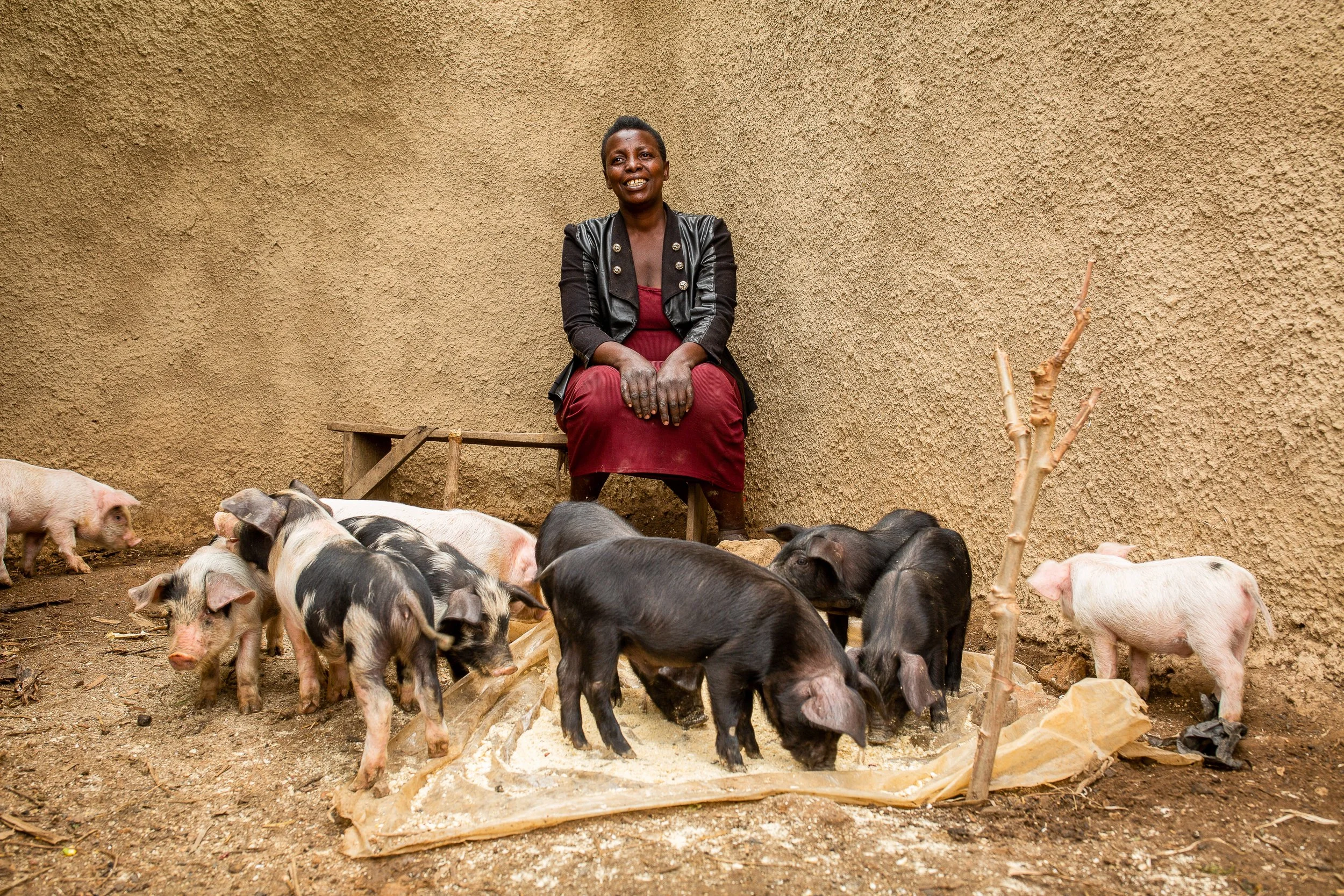
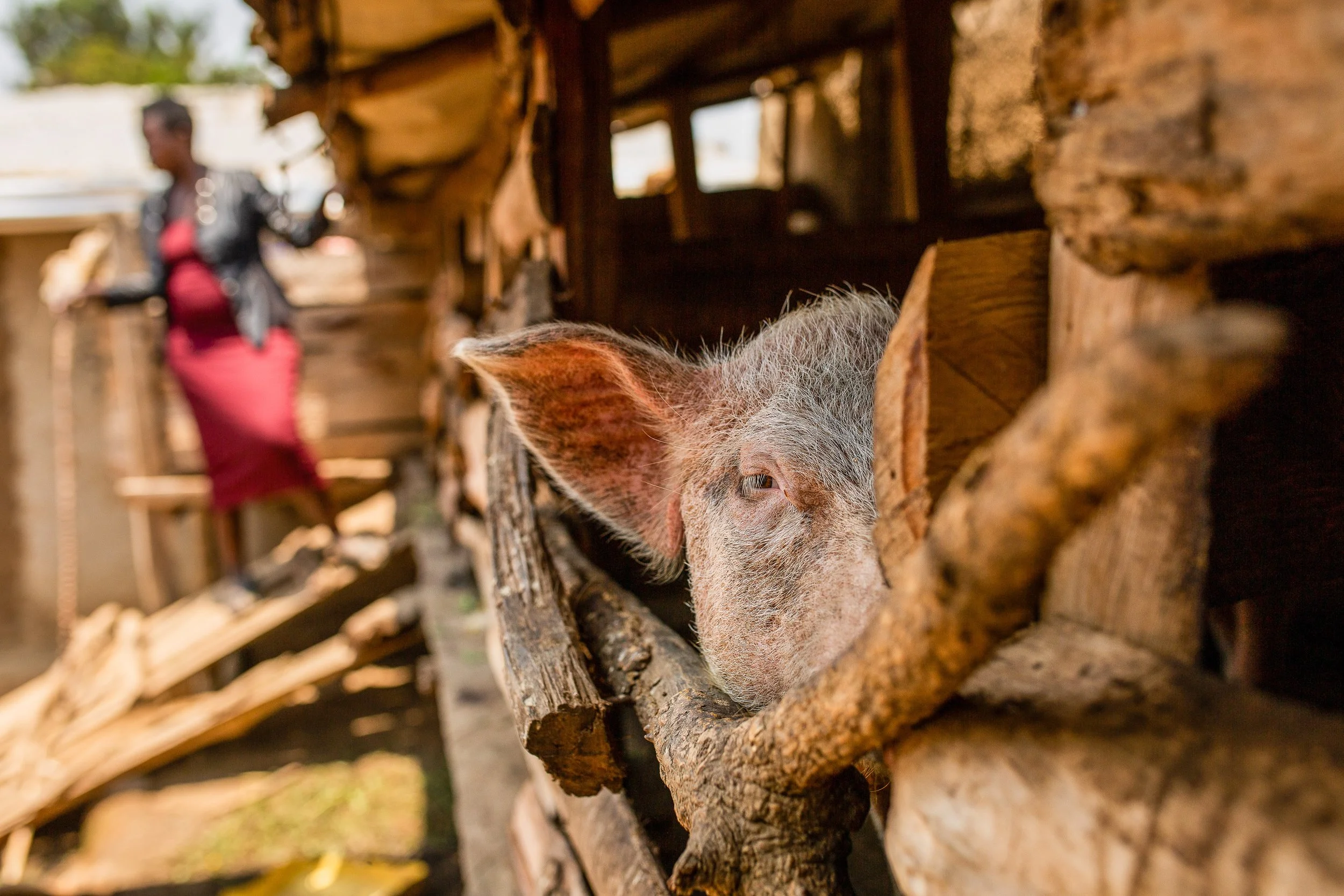
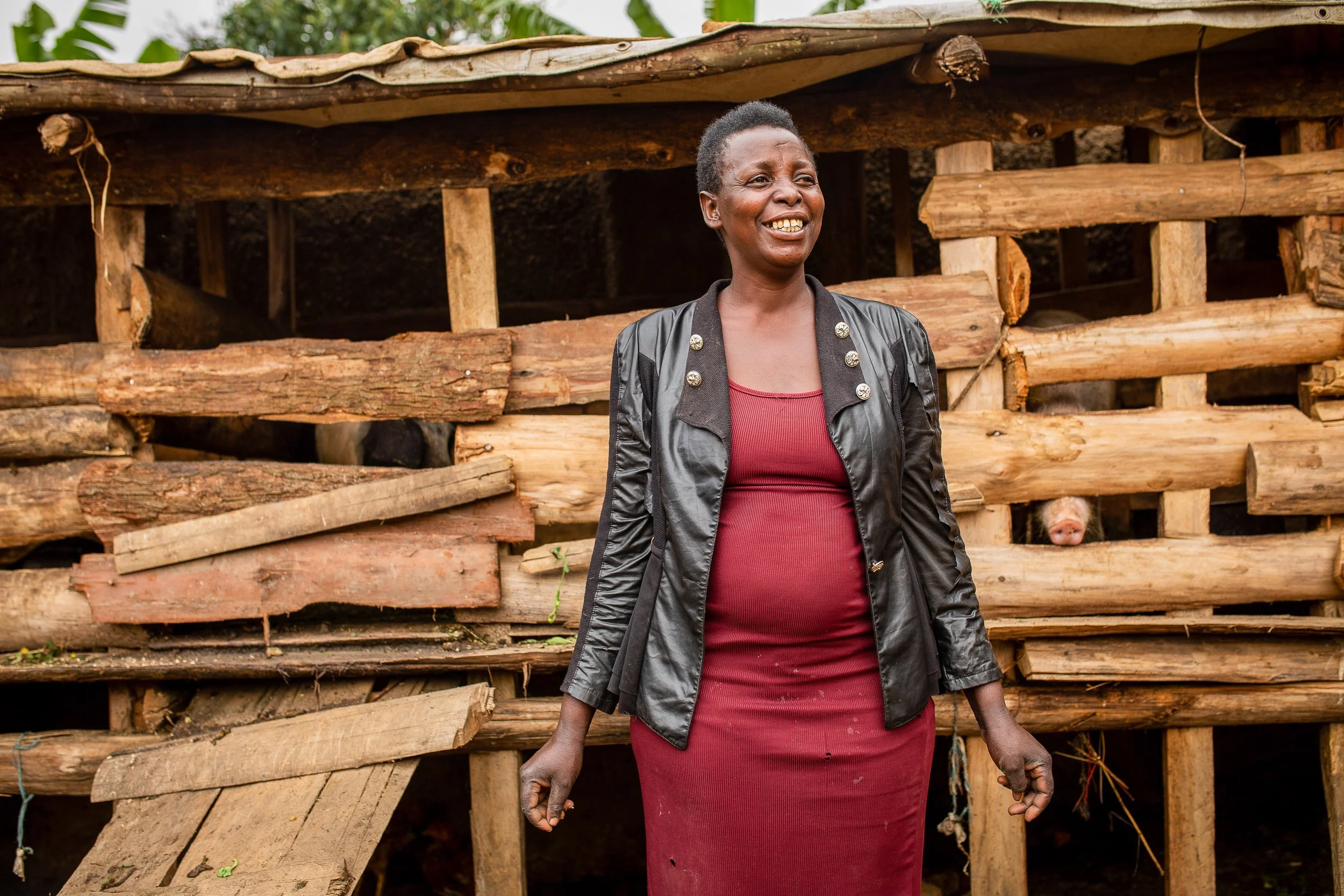
After the training, I saved and borrowed money to buy pigs, chickens and rabbits.
When the pigs had piglets, and the hens produced chicks, I was able to sell some of them. If one of my children became sick, I could sell a chicken and buy medicine. If we needed food, I could use what I had raised myself.
We’re good now, we’re safe. I feel safe here.
I’ve improved my savings and now I’m confident that if I get a loan from my savings group, I can pay it back.
Life is still challenging.
Recently, my plot of land was reduced to make space for other refugees. This meant I lost the plantain plantation that helped feed my family and provided fodder for my pigs.
Now the plot is small and the pigs are much closer to my house. We are susceptible to diseases due to microbes from the pigs and chickens. I am worried about my children getting diseases.
One of my pigs was also stolen, which forced me to borrow again from the savings group.
Being a woman here is challenging too. We’re very burdened; we are raising children, treated poorly at the hospital when we’re giving birth, sometimes we have to give birth on the floor, and they don’t keep our health conditions confidential. If we have insufficient finances and need to find work, it can put us in dangerous situations too.
Women are strong chords of the family and sometimes they are the problem solvers.
It’s important to give women opportunities so they are able to provide for their children, pay school fees, get medication and dress themselves.
After raising livestock, the problems have lessened. The animals are growing. We don’t face extreme hunger now. I’ve learned how to steer my family and how to raise livestock.
My children are doing better now. We are united. They get school fees without difficulty and they eat well. The kids are really happy.
I can stand on my own, take care of my children and make investments.
In the future, I hope to pay my children’s school fees without difficulty, get them medication, eat and live well.
In 20 years’ time, I’ll be a strong old woman who has educated children. Some will be directors or ministers. They will be smart, open-minded and able to sustain themselves.
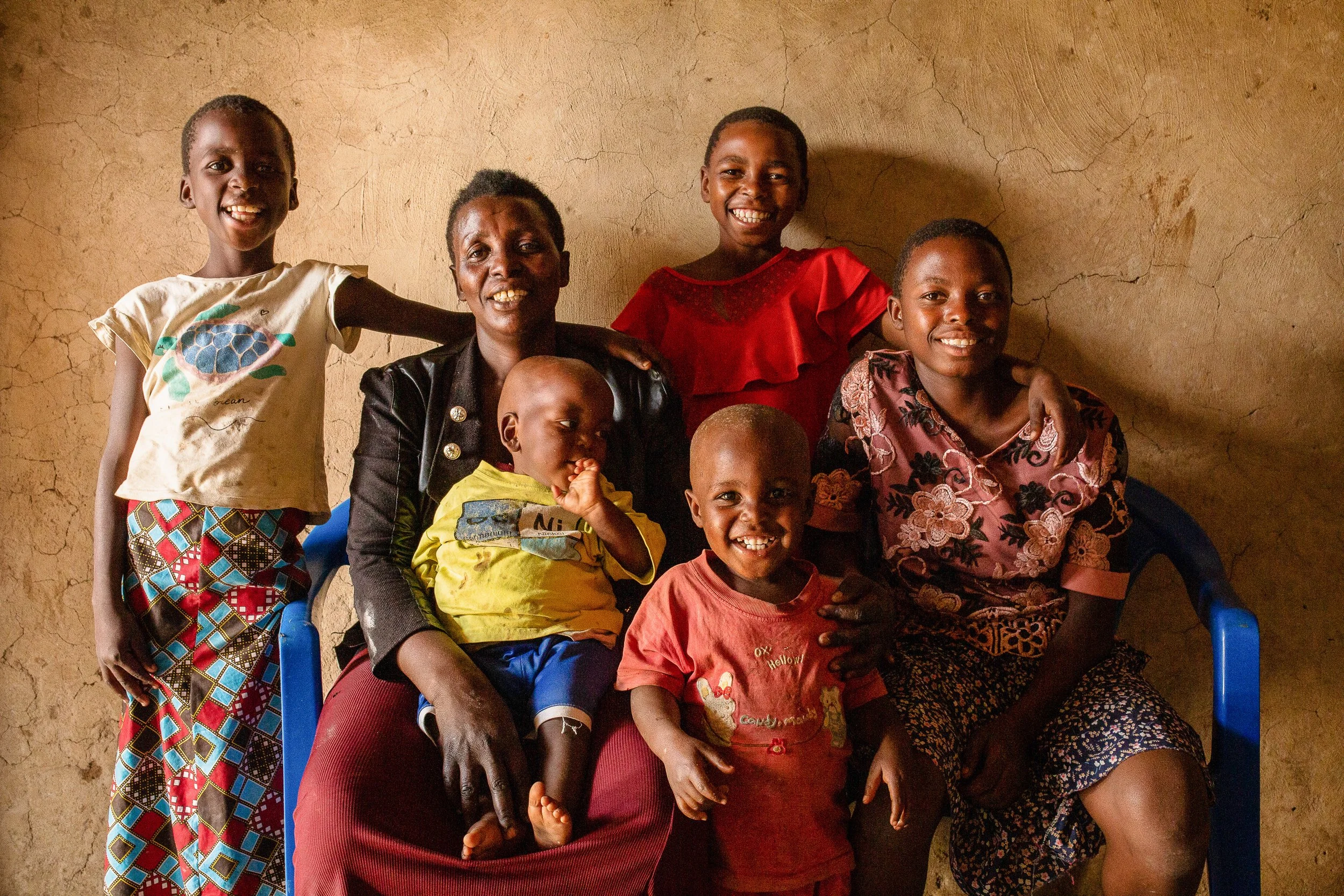
In the future, I hope my children will lead good lives.
Discover more stories
-
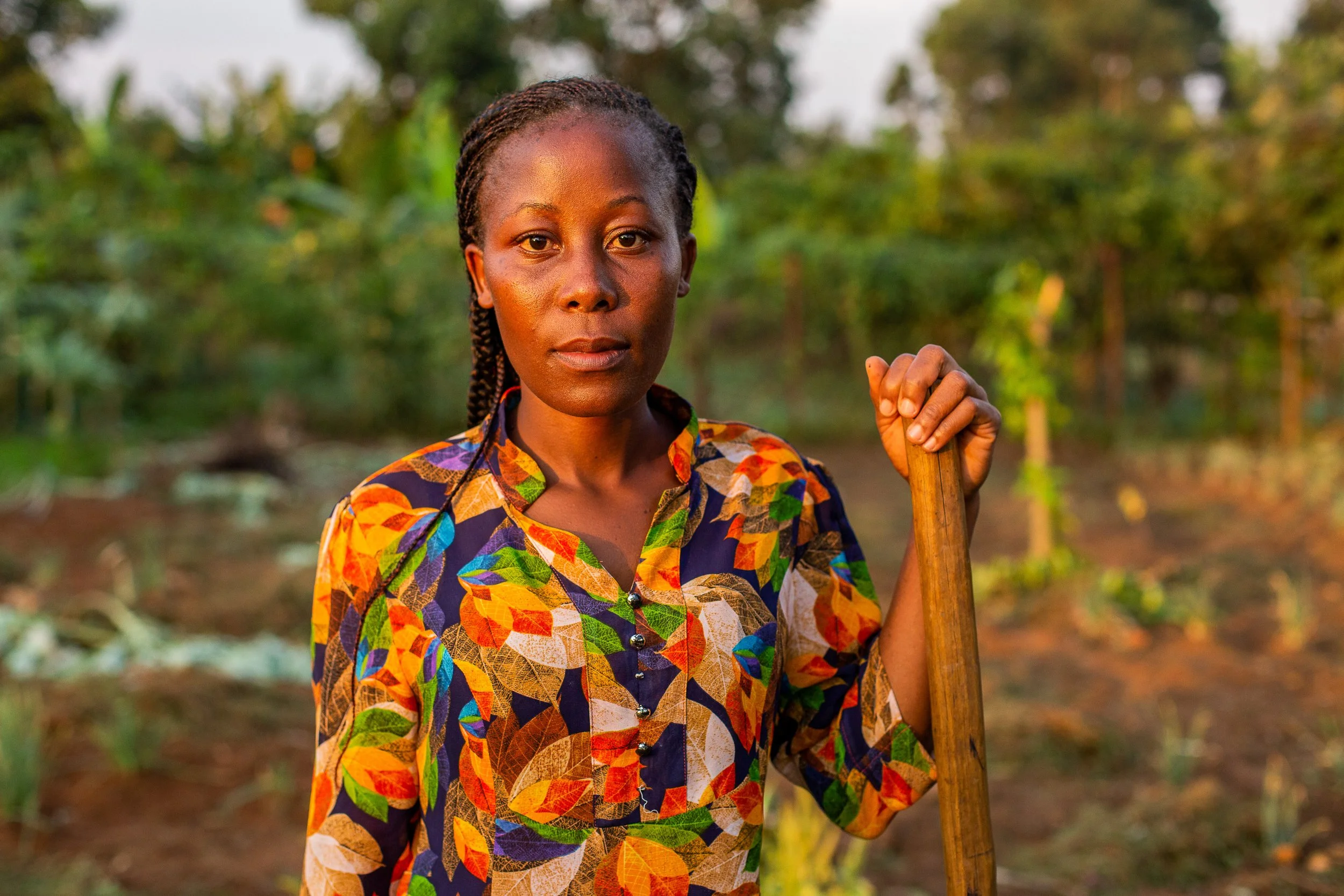
![Ruth stands in her kale field at sunset, her hand resting on top of a farm tool.]()
Ruth
-
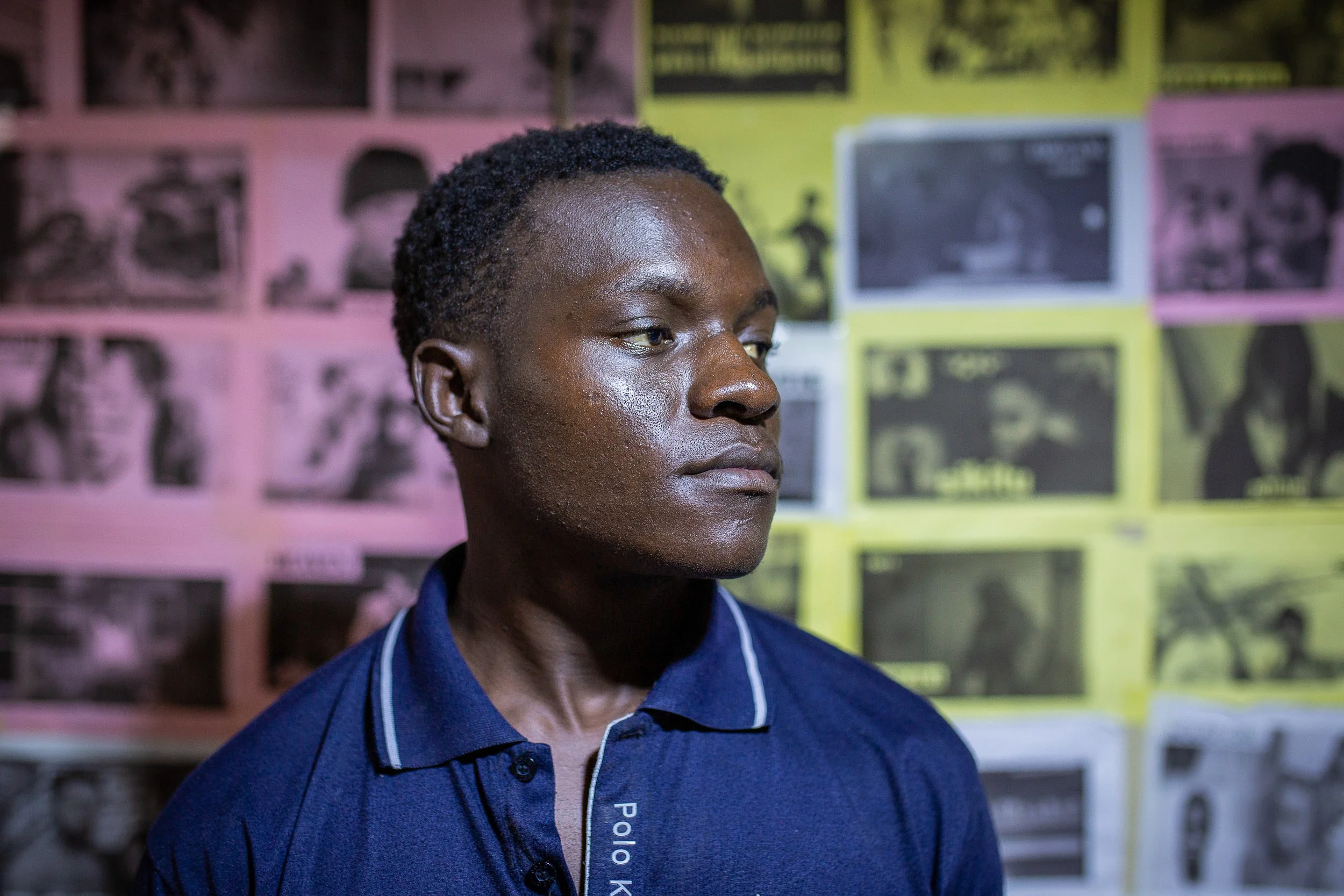
![Alfred looks off to his left and stands against a wall of black and white photos printed on white, yellow and pink paper.]()
Alfred
-
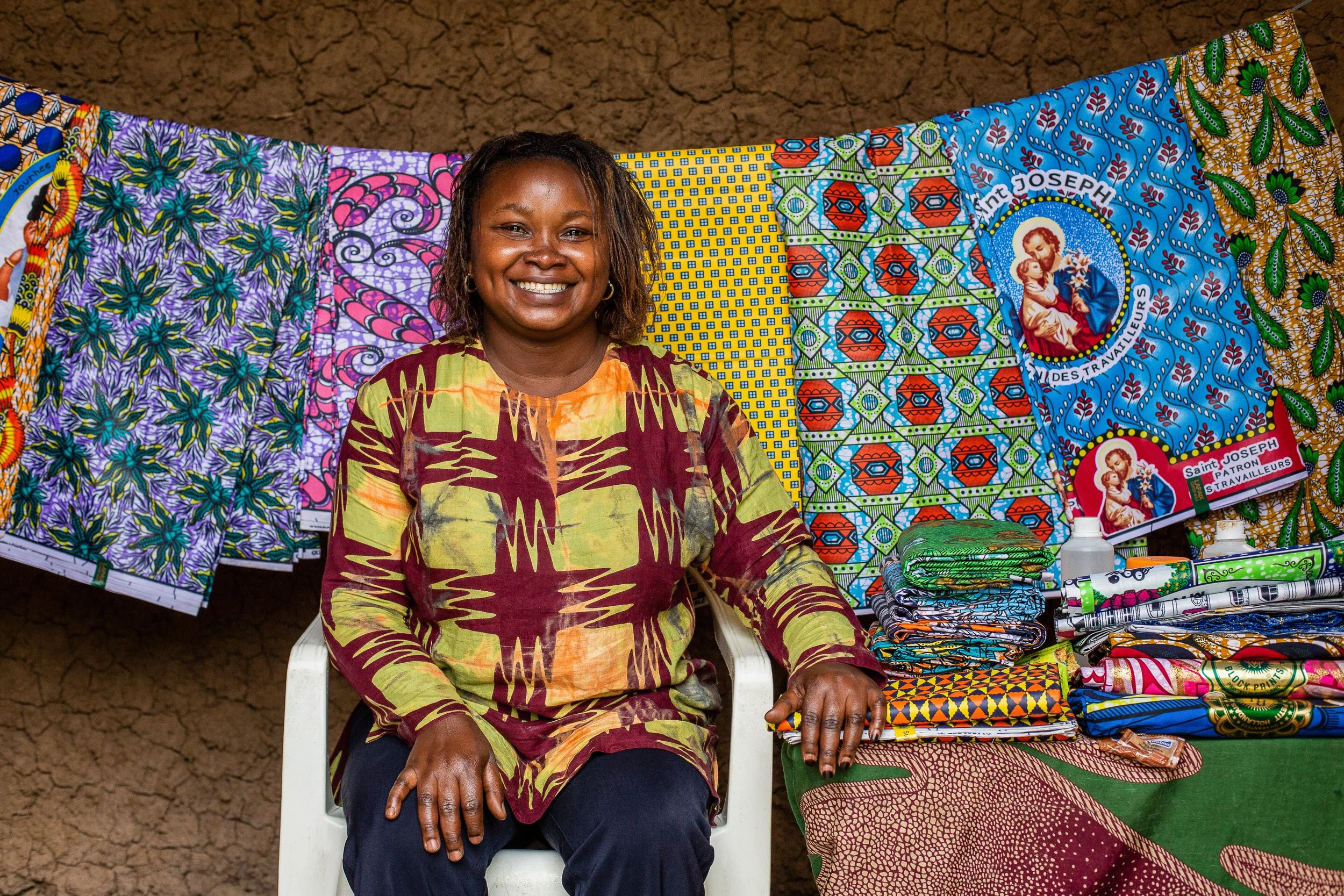
![Furaha sits in front of African wax print fabric hanging up.]()
Furaha
-
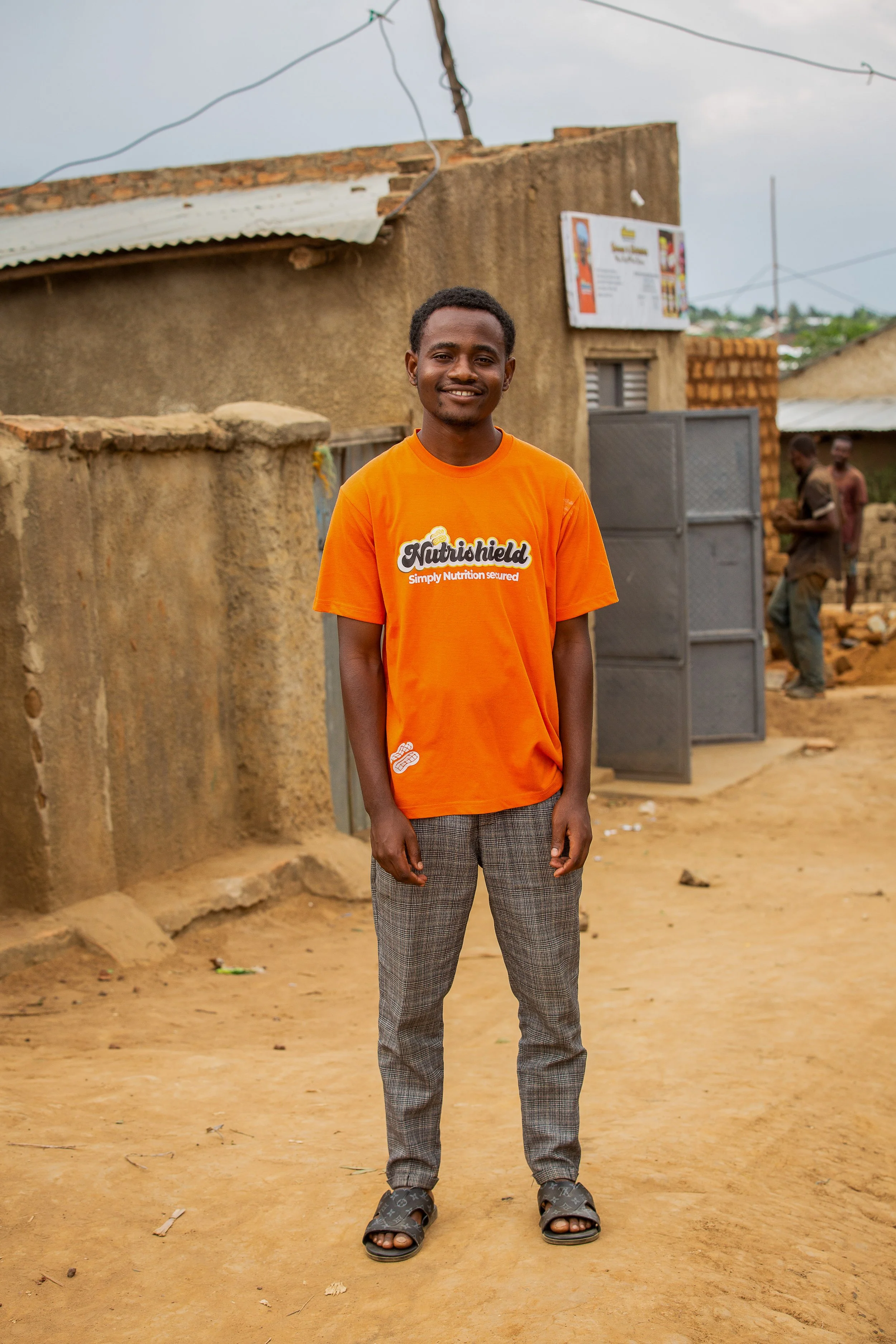
![Savino stands smiling outside of his business weaning a bright orange top that says 'nutrishield']()
Savino
-
![Mediatrice looks off to the right of a camera, she is wearing a pink apron and against a green painted wall.]()
Mediatrice
-
![Luhavu looks to the camera wearing a bright red coat and protective glasses on his head.]()
Luhavu
-
![Joshua stands in his fish farm, knee deep in water.]()
Joshua